
 It was off ebay from a young guy, but basically brand new, with all stickers etc and protective plastic stuff intact. The yellow ones aren't available new anywhere anymore, but some German suppliers still have the sunburst. Some people have a problem with them being made in China, like it's automatically suspect, but they've been making stringed instruments there for hundreds of years, so I don't think it's an issue per se. I feel slightly bad about supporting the exploitation of Chinese workers - it's cheap because labour is cheap - but that's international capitalism, right? I didn't buy it new, but still.
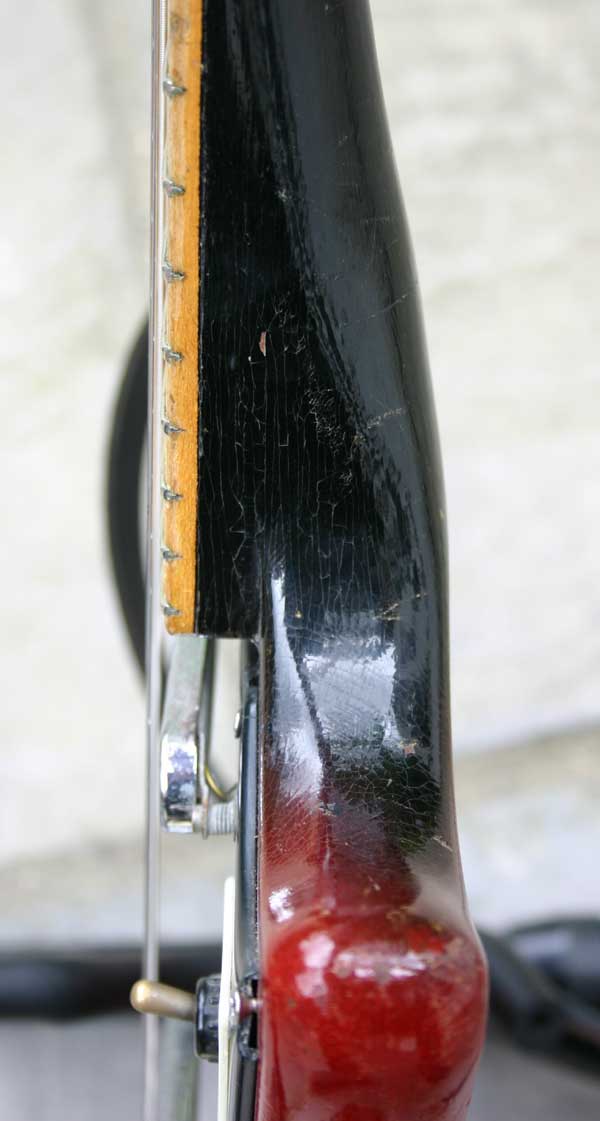
All my other electric guitars are 40-50 years old, so the newness was more of an issue. It felt big and heavier than I like, almost 8lbs. Some of the fret ends were a bit sharp, but I sorted those out. Frets are chunky, but ok. The neck itself is apparently thicker than a '60s neck, but not a true '50s thickness - I would have liked it thicker but it feels fine really. The fretboard is dense-grained and dark, and felt very dry at first, not like old rosewood at all (surprise!) I dabbbed on some lemon oil and rubbed my greasy fingers into it for half an hour to simulate some kind of preliminary wear. I also sanded along the edge of the fretboard so it wouldn't be so sharp, and dulled down the finish on the back of the neck with 00 steel wool, so it wouldn't be so sticky. These things all helped a lot with the playing 'feel'.
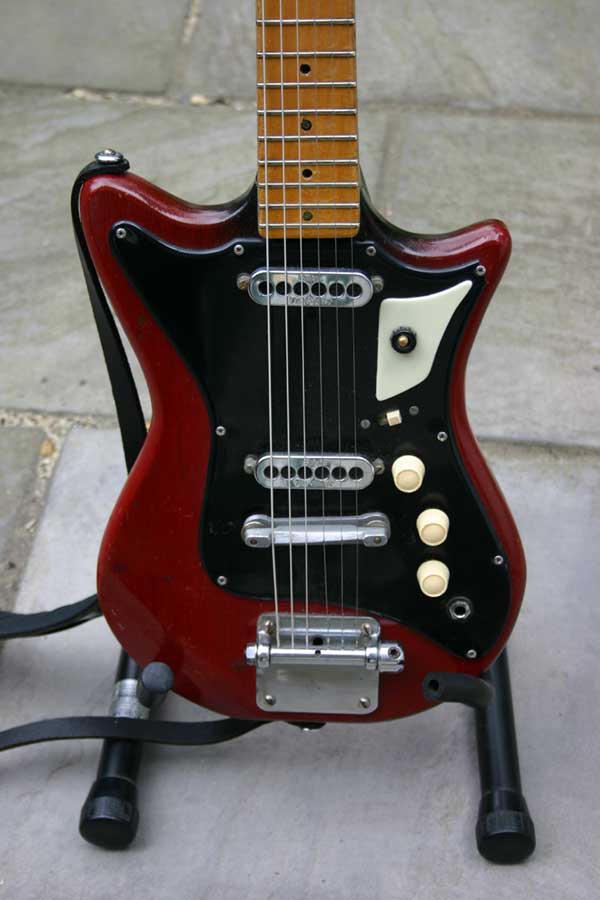
I made some other changes too - what can I say? I'm a tinkerer. The tuners were perfectly good, but I changed them for some nickel plated Grovers I had; I cut the nut slots down by a bit and rounded off the sharp edges around the nut so my hands don't catch on them; I swapped the wrong-looking chrome wraparound compensated bridge for a repro '50s uncompensated bridge/tail, in nickel, naturally. I'm even going to change the strap buttons for nickel ones. I like it! I tightened the truss rod a bit as it was totally loose, and improved the action (though it was ok as it was). I was really willing to give the P100 a go, because I don't have any other guitars with humbuckers and I didn't want to be swayed by the fact that everyone else has replaced it, but after various experiments I decided I'd swap that out too, for a GFS P90 I had in a kind of frankenstein Supro neck Junior I flung together earlier this year (the neck didn't really work with that body...). The consensus on GFS pickups is they're good for the money, and better than the stock Epiphones, but not as good as the £100+ boutique hand-wound ones (surprise no.2) With the pole pieces slightly down on the bass side, and screwed right down to the top, it does sound pretty much like a brighter dirtier Supro pickup. I was surprised to see the treble bleed (tone) capacitor was was a whopping 0.068uF - I changed it for a '50s 0.05 WIMA ceramic I had, but I might replace it with a smaller value in time. Tinker tinker tinker.
The verdict so far is - yes, I like it and it's not going straight back to ebay, but I would still sell it quick if a Supro Belmont came my way cheap. Been playing it every minute I get though, which is a good sign, still need to fine tune the intonation and action.... The acoustic sound is quite twangy, but not as bright as the oldies.
It was off ebay from a young guy, but basically brand new, with all stickers etc and protective plastic stuff intact. The yellow ones aren't available new anywhere anymore, but some German suppliers still have the sunburst. Some people have a problem with them being made in China, like it's automatically suspect, but they've been making stringed instruments there for hundreds of years, so I don't think it's an issue per se. I feel slightly bad about supporting the exploitation of Chinese workers - it's cheap because labour is cheap - but that's international capitalism, right? I didn't buy it new, but still.
All my other electric guitars are 40-50 years old, so the newness was more of an issue. It felt big and heavier than I like, almost 8lbs. Some of the fret ends were a bit sharp, but I sorted those out. Frets are chunky, but ok. The neck itself is apparently thicker than a '60s neck, but not a true '50s thickness - I would have liked it thicker but it feels fine really. The fretboard is dense-grained and dark, and felt very dry at first, not like old rosewood at all (surprise!) I dabbbed on some lemon oil and rubbed my greasy fingers into it for half an hour to simulate some kind of preliminary wear. I also sanded along the edge of the fretboard so it wouldn't be so sharp, and dulled down the finish on the back of the neck with 00 steel wool, so it wouldn't be so sticky. These things all helped a lot with the playing 'feel'.
I made some other changes too - what can I say? I'm a tinkerer. The tuners were perfectly good, but I changed them for some nickel plated Grovers I had; I cut the nut slots down by a bit and rounded off the sharp edges around the nut so my hands don't catch on them; I swapped the wrong-looking chrome wraparound compensated bridge for a repro '50s uncompensated bridge/tail, in nickel, naturally. I'm even going to change the strap buttons for nickel ones. I like it! I tightened the truss rod a bit as it was totally loose, and improved the action (though it was ok as it was). I was really willing to give the P100 a go, because I don't have any other guitars with humbuckers and I didn't want to be swayed by the fact that everyone else has replaced it, but after various experiments I decided I'd swap that out too, for a GFS P90 I had in a kind of frankenstein Supro neck Junior I flung together earlier this year (the neck didn't really work with that body...). The consensus on GFS pickups is they're good for the money, and better than the stock Epiphones, but not as good as the £100+ boutique hand-wound ones (surprise no.2) With the pole pieces slightly down on the bass side, and screwed right down to the top, it does sound pretty much like a brighter dirtier Supro pickup. I was surprised to see the treble bleed (tone) capacitor was was a whopping 0.068uF - I changed it for a '50s 0.05 WIMA ceramic I had, but I might replace it with a smaller value in time. Tinker tinker tinker.
The verdict so far is - yes, I like it and it's not going straight back to ebay, but I would still sell it quick if a Supro Belmont came my way cheap. Been playing it every minute I get though, which is a good sign, still need to fine tune the intonation and action.... The acoustic sound is quite twangy, but not as bright as the oldies.

 Posts
All Comments
Posts
All Comments


